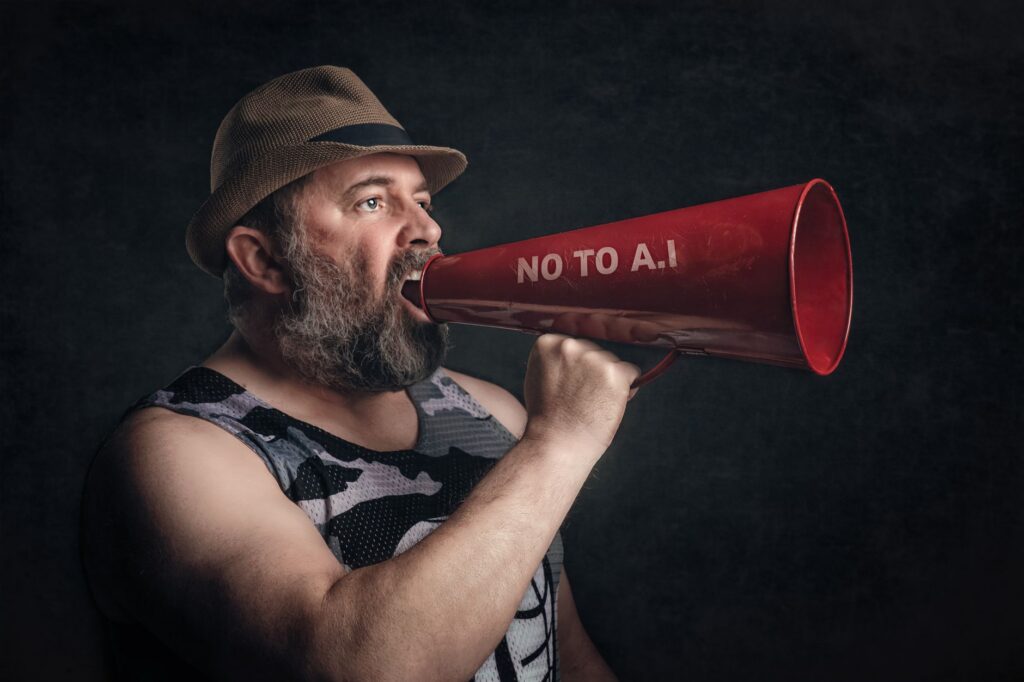
AI’s unstoppable march has created a perfect storm for hatred. The technology that promised to solve humanity’s problems is now fueling one of the most dangerous forms of extremism imaginable. Sources indicate that anti-tech movements, once niche groups ranting about “the dangers of sentient code,” have exploded into mainstream political violence. The Guardian reports that this surge is directly tied to the “breakneck” pace of AI development, which has left regulators, ethicists, and even ordinary people bewildered and resentful.
What Happened?
AI’s exponential growth over the past five years has created a societal backlash that was never anticipated. While tech giants tout AI as the next industrial revolution, a splinter group of former developers and disillusioned users has begun organizing violent actions against companies and institutions they associate with “the AI overreach.” Reports suggest incidents ranging from targeted hacking of AI research labs to physical attacks on tech executives. The catalyst? A perceived betrayal of public trust as AI systems are deployed for surveillance, misinformation, and corporate profit without adequate safeguards. This isn’t just about fear of machines—it’s about power. The extremists frame their actions as a defense against “techno-fascism,” a term they’ve coined to describe what they see as the unchecked domination of life by algorithms.
One particularly alarming development is the use of AI tools by these groups themselves. According to leaked documents, some extremists are leveraging AI to design propaganda, automate disinformation campaigns, and even plan attacks. The irony is stark: the technology they despise is now their weapon. A developer who spoke anonymously to The Guardian said, “They’ve taken our code and turned it into a spaceship for their own annihilation. It’s like giving a toddler a chainsaw and expecting it to build a house.”
Who’s Involved?
The brake is massive: tech companies like DeepMind, OpenAI, and Meta are under scrutiny, but they’re not the only players. Governments are implicated too. The UK’s Ministry of Digital Affairs has been criticized for failing to regulate AI’s societal impact, while France’s AI watchdog has issued warnings about the “normalization of violence” in tech discourse. Meanwhile, extremist groups like Neo-Luddite Tomorrow and the Silicon Valley Vanguard have gained traction online, with forums dedicating hundreds of thousands of posts to rallying engineers and tech workers to their cause.
Prominent figures have been named in the reports. A former lead engineer at a major AI firm reportedly left their position after discovering their work was being used to train systems that would “amplify state surveillance.” Another, a vocal critic of AI ethics boards, claimed in a since-deleted X post, “These companies are building a digital panopticon. We’re not just building tools—we’re building chains.” Their accusations, while hyperbolic, have found fuel in the growing disillusionment among tech workers who feel complicit in a system they no longer trust.
What Was Said?
Quotes from the sources are sparse, but the tone is unequivocal. The Financial Times notes that corporate leaders are struggling to articulate a response. A spokesperson for Meta stated, “We’re committed to building safe, ethical AI. Any suggestion that our work fuels extremism is both false and harmful.” Meanwhile, a UK parliamentary inquiry into AI’s societal risks concluded that “the rapid commercialization of AI has outpaced moral and legal frameworks, creating a vacuum that extremists exploit.” Critics, however, argue this is little more than bureaucratic paper-pushing. Former Prime Minister Boris Johnson, now a consultant for a tech think tank, quipped, “If AI is the future, let’s hope it’s not a future where my wine critics start getting deported for ‘algorithmic bias.’”
Why Now?
The “breakneck” boom refers to the past two years, during which AI models like GPT-5 and others achieved capabilities that defied expectations. This period saw massive investment, job displacement fears, and a series of high-profile scandals—like an AI system used by a major bank to deny loans based on biased data. The result? A crisis of confidence. People don’t just fear AI; they resent it for reshaping their lives without their consent. The extremists exploit this resentment, arguing that tech companies prioritize profit over people, and that AI developers are complicit in this.
Historically, similar patterns have emerged with other transformative technologies. The Luddites targeted textile machinery in the 1800s, and the anti-internet crowd in the 2000s warned of digital enslavement. But AI’s scale and speed are unprecedented. Unlike previous technologies, AI doesn’t just automate tasks—it learns, adapts, and potentially surpasses human intelligence. This makes it a uniquely destabilizing force. As one academic put it to The Telegraph, “We’re not just creating a tool; we’re creating a mirror that reflects our worst impulses back at us.”
The Reaction
The response has been a mix of panic and denial. Tech companies have launched “AI safety pacts,” which critics dismiss as performative. The UK’s Tech Oversight Commission has proposed mandatory ethical audits for AI systems, but enforcement is unclear. Meanwhile, the extremist groups are thriving. Their panels are packed, their rhetoric more sophisticated, and their network more resilient. A report from a cybersecurity firm found that these groups have infiltrated major online platforms, using AI to bypass content moderation and spread their message.
Public opinion is divided. Younger generations, who grew up with AI, seem more accepting—though many express frustration at its misuse. Older demographics, however, are increasingly vocal. A survey published by The Guardian found that 42% of respondents over 55 believe AI should be banned entirely. Social media is a battleground, with hashtags like #StopTheCode and #AISmartOrDie trending daily. The Telegraph notes that even some politicians are joined in this discourse, with a think tank proposing a “techno-neutrality” tax on AI development to fund social programs.
Consequences
The fallout could be catastrophic. If anti-tech extremism gains momentum, it could lead to a chilling effect on innovation. Companies might retreat from AI research to avoid backlash, stifling progress. On the flip side, the extremists’ actions could result in significant loss of life and property. The Tech Violence Reduction Council estimates that AI-related incidents could account for 15% of cyberattacks by 2030. For ordinary people, the stakes are personal. Imagine a world where your smart home is hacked by an extremist group, or your medical data is weaponized. The line between technology and terrorism is blurrier than ever, and it’s being crossed daily.
Economically, the situation is dire. Investors are wary of pouring money into AI if they perceive it as a liability. A report from the Financial Times highlighted that stock prices for AI startups dropped 12% last month amid fears of regulatory crackdowns and public backlash. This could trigger a cascade of failures, not just in tech but in sectors that rely on AI, like healthcare and transportation. The consequences aren’t just digital—they’re real, immediate, and potentially life-altering.
In the end, this isn’t just about AI. It’s about how society deals with disruptive change. The extremists aren’t anti-technology per se—they’re anti-the way technology is being exploited. The real question is whether we can harness AI’s potential without surrendering to its dangers. As a journalist who’s seen more tech disasters than most, I say this: if we don’t start treating AI like a nuclear weapon—with the same level of caution and debate—we’re doomed to repeat the mistakes of the past. And let’s be clear: the “AI boom” isn’t a benefit. It’s a hemorrhage of control, and someone is going to bleed for it.