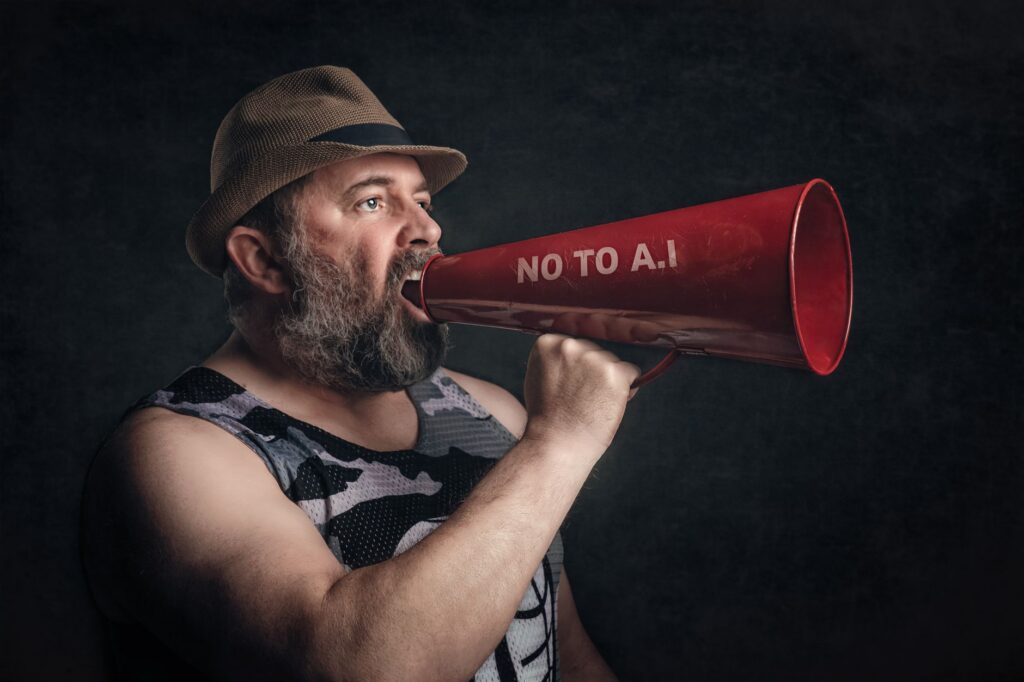
Three major outlets published three wildly different takes on AI’s employment impact within four hours of each other this morning, and the whiplash is enough to give you whiplash. Jeff Bezos, a man who has never met a disruptive technology he didn’t want to monetise, told the Financial Times that artificial intelligence will usher in “golden ages” rather than mass unemployment. Meanwhile, CNN reported that the much-hyped AI jobs boom is real — just not for anyone trying to actually start a career. The Guardian, not to be outdone, declared that “AI absolutism is breaking our brains” and the apocalyptic future we’re being sold isn’t inevitable. Same day. Same topic. Three completely different realities.
Bezos Predicts Utopia From The Man Who Brought You Warehouse Injuries
Let’s start with the billionaire. Jeff Bezos, founder of Amazon and current owner of the Washington Post, used his Financial Times interview to dismiss concerns about AI-driven job losses as short-sighted panic. He argued that technological revolutions historically create more work than they destroy, citing the Industrial Revolution and the internet as proof that humanity adapts. This from a man whose company has spent two decades perfecting the art of replacing humans with robots in fulfilment centres while fighting unionisation efforts with the ferocity of a cornered badger. Bezos claims we’re heading for “golden ages” — plural, notice — of prosperity and creativity unleashed by artificial intelligence.
The irony is thicker than a Dickens novel. Amazon Web Services sells the very AI infrastructure that companies are using to automate entry-level roles out of existence. Bezos has a direct financial interest in you believing the robot revolution will be a net positive for humanity. He didn’t mention that Amazon has eliminated thousands of warehouse positions through automation while creating a smaller number of higher-skilled robotics maintenance roles. Nor did he address the minor detail that the “golden age” he describes requires a level of retraining and educational access that doesn’t exist for the workers most at risk. Easy to preach adaptation when you own the platform.
CNN Exposes The Dirty Secret: Experience Required
While Bezos was painting his utopian vision, CNN dropped a report that reads like a cold shower for anyone under thirty. The network found that AI is indeed creating jobs — but the vast majority require three to five years of experience minimum. Entry-level positions, the traditional on-ramp for graduates and career-switchers, are vanishing faster than free coffee at a startup. Companies are hiring “AI prompt engineers” and “machine learning operations specialists” with salaries north of £80,000, but they want people who’ve already done the job elsewhere. The ladder’s bottom rungs have been sawn off.
This isn’t theoretical. A recent Computer Weekly survey found that 67% of UK tech firms have frozen or reduced graduate hiring since 2024, citing AI tools that can now handle junior coding, copywriting, and data analysis tasks. The same firms increased senior hiring by 23%. CNN spoke to a 24-year-old computer science graduate in Manchester who’s applied for 140 positions since January and received three interviews — all for unpaid internships. “They want me to have experience with tools that didn’t exist when I was at university,” he said. The jobs boom Bezos celebrates is a boom for people who already have careers. For everyone else, it’s a locked door.
Guardian Attacks The Narrative War Itself
The Guardian’s piece takes a different angle entirely. Instead of arguing about numbers, it attacks the framing. The article argues that we’re trapped between two flavours of AI absolutism: the doomers who insist superintelligence will kill us all by Tuesday, and the boosters like Bezos who insist it’ll solve cancer, climate change, and boredom by Wednesday. Both sides, the paper contends, serve the same function — they remove agency from ordinary people and concentrate power in the hands of the few companies building the technology. “The apocalyptic future we’re being sold isn’t inevitable” is the strapline, and it’s a fair cop.
The piece traces how both narratives benefit Big Tech. Fear drives regulation that entrenches incumbents — only Google, Microsoft, and Amazon can afford the compliance costs of the EU AI Act. Hype drives investment and prevents scrutiny of labour practices, environmental costs, and the concentration of compute power. The Guardian quotes a researcher at the Ada Lovelace Institute who describes the current discourse as “a manufactured binary designed to prevent democratic conversation about what we actually want from these systems.” She’s not wrong. While we argue about whether AI is Skynet or the Messiah, the people building it are rewriting the social contract without asking.
The Class War Nobody Wants To Name
Here’s what connects all three stories: class. Bezos speaks for capital — he wants a pliable workforce that embraces “reskilling” as a personal moral duty rather than a collective societal obligation. CNN documents the consequences for labour — a generation locked out of the professional middle class because the entry points have been automated away. The Guardian identifies the ideological superstructure keeping both in place — a discourse that presents technological outcomes as natural laws rather than political choices. None of these outlets would put it so bluntly, but the picture is clear.
Consider the timeline. ChatGPT launched in November 2022. By mid-2023, copywriting agencies were replacing juniors with prompt engineers. By 2024, major law firms were using AI for document review previously done by trainees. By early 2025, the Big Four accounting firms had cut graduate intakes by 30% while increasing experienced hire budgets. This isn’t a future prediction. It’s a documented trajectory. The “golden age” Bezos promises has already arrived for shareholders and senior professionals. For the 22-year-old in Manchester sending her 141st application, it feels rather more like the gilded age — all glitter on top, rot underneath.
What Happens Next Is Up To Us, Actually
The Guardian is right about one thing: none of this is inevitable. The UK government could enforce meaningful apprenticeship levies on companies deploying AI automation. It could fund a national compute resource for public interest research rather than letting AWS and Azure set the terms. It could strengthen collective bargaining so that “reskilling” becomes a negotiated right with paid time and guaranteed roles, not a LinkedIn Learning subscription bought on your own dime. The Labour government elected in 2024 has done precisely none of these things. Peter Kyle, the Science Secretary, gave a speech last month praising “AI-driven productivity gains” without mentioning the distributional consequences. Keir Starmer met with Sam Altman in Davos and came back talking about “unleashing British innovation.” The political class has bought the Bezos narrative wholesale.
So we’re left with three stories on one Thursday in June 2026. A billionaire promising paradise. A news network documenting the closed door. A newspaper shouting that the debate itself is rigged. The reader is meant to pick a side — optimist or pessimist, booster or doomer. But the real choice is different. It’s whether we accept that technological change is something that happens to us, or whether we demand it happens for us. Bezos has made his choice. He’ll be fine either way. The 24-year-old in Manchester? She’s still waiting for an interview.